
Summary
Understanding what happens as dementia progresses helps families prepare for changing needs and make informed care decisions. This guide explores the stages of dementia progression and how to plan for appropriate support at each phase.
- Early stages may involve subtle memory lapses, difficulty finding words, and occasional confusion—many people continue managing familiar routines with minimal assistance
- As dementia progresses to moderate stages, people may experience difficulty recognizing familiar people, increased restlessness, and greater help needed with personal routines
- Advanced stages typically require comprehensive assistance with daily activities, with communication becoming more limited and personalized support becoming essential
- Early planning allows families to tour memory care communities, discuss preferences, and explore options before an urgent need develops
- Quality care adapts to each person's abilities and preferences rather than expecting the individual to conform to rigid routines
Understanding what happens as dementia progresses can help families prepare for a loved one’s changing needs. While every person’s experience is different, recognizing common patterns in cognitive decline can make progressive dementia care planning feel more manageable. Families can explore support early, ask thoughtful questions, and make decisions based on current and future needs.
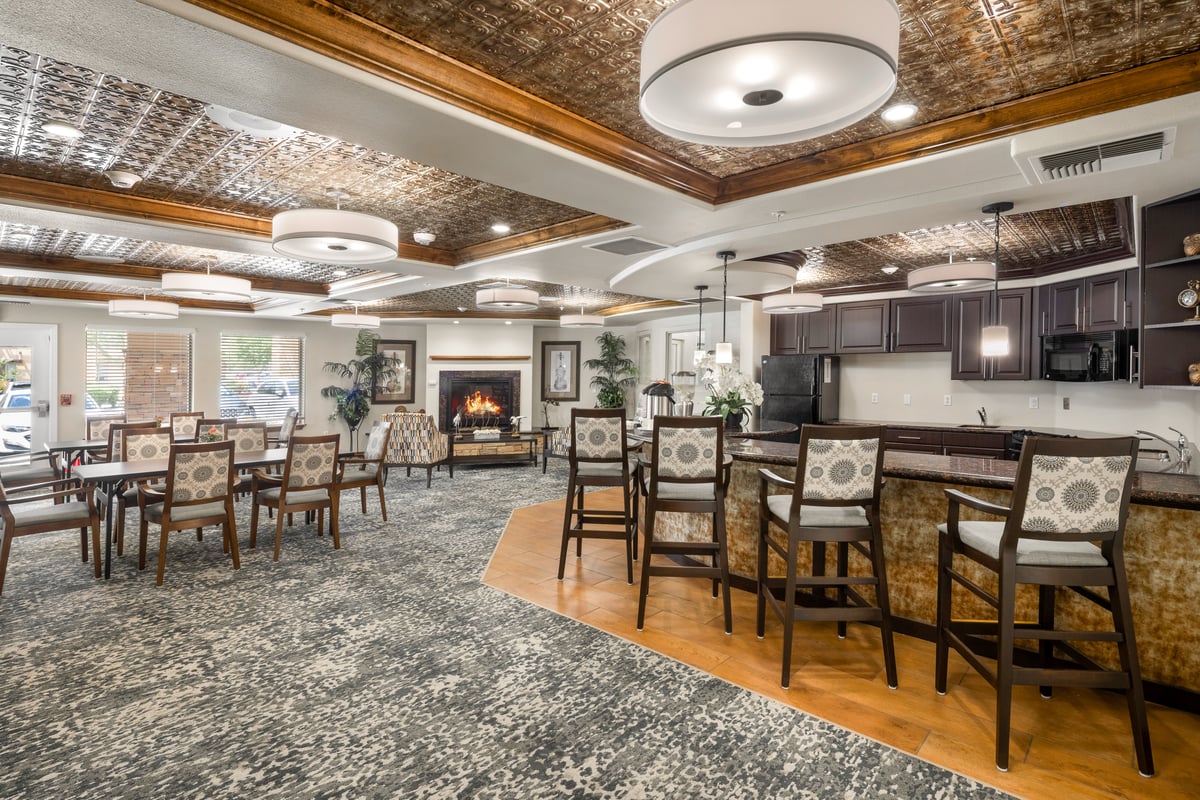
At The Palms At La Quinta, families can explore Assisted Living and Memory Care in a welcoming setting at the base of the Santa Rosa Mountains. Understanding the dementia progression timeline can help families recognize when specialized support may become appropriate.
Understanding Early Signs and Mild Changes
In the early stages, a person living with dementia may experience subtle memory lapses, difficulty finding words, or occasional confusion about dates and appointments. Many people continue managing familiar routines with minimal assistance. Families may notice repeated questions, misplaced belongings, or increasing difficulty with complex tasks.
During this stage, simple changes and additional support may help with everyday routines:
- Creating a consistent environment that supports easier navigation
- Providing medication reminders and help with complex responsibilities
- Exploring future support options before needs become more significant
Early planning also gives families time to discuss preferences and learn about available living options without feeling pressured to make an immediate decision.
Recognizing Moderate-Stage Dementia Progression
As dementia progresses, a person may have more difficulty recognizing familiar people, understanding time and place, or completing personal routines. The dementia progression timeline varies significantly, and changes may develop gradually over months or years.
Families may begin noticing:
- Increased restlessness, anxiety, or changes in sleep patterns
- Greater difficulty with bathing, dressing, or other personal routines
- More frequent confusion about familiar people, places, or surroundings
This stage often raises the question, “When does dementia require memory care?” There is no single point that applies to everyone. Families can consider whether their loved one increasingly needs structure, supervision, personalized assistance, or an environment specifically designed around cognitive changes.
The Palms At La Quinta offers Memory Care with a person-centered approach that focuses on the individual rather than defining someone by a diagnosis. Familiar routines, thoughtful surroundings, and support from Associates can help create greater consistency as dementia stages and care needs become more complex.
Planning for Advanced Dementia Care Needs
In advanced stages, people living with dementia may need comprehensive assistance with everyday routines. Communication can become more limited, mobility may change, and awareness of surroundings can decrease. Advanced dementia care options should prioritize dignity, comfort, personalized assistance, and opportunities for meaningful connection.
Families considering memory care can look for an environment that can adapt as needs evolve. The Palms offers apartment homes along with inviting common spaces and landscaped outdoor areas. Residents can also participate in programs based on their interests, routines, preferences, and abilities.
Creating a Flexible Care Plan for Changing Needs
Effective dementia care planning recognizes that progression does not follow a rigid schedule. Regular conversations with family members and support professionals can help identify meaningful changes and determine whether current arrangements continue to meet a loved one’s needs.
Touring memory care communities before an urgent need develops can help families:
- Compare environments, programs, apartment homes, and available support
- Ask how asociates respond as cognitive and personal support needs change
- Make a thoughtful decision instead of beginning the search during a crisis
For families in La Quinta, exploring options early can also provide a clearer picture of daily life in Memory Care. At The Palms, the community combines personalized support with programs such as Vibrant Life® and Elevate® Dining, helping residents maintain familiar routines while experiencing connection and engagement.
Supporting Quality of Life Throughout the Journey
Regardless of stage, a person living with dementia remains an individual with preferences, experiences, relationships, and abilities that deserve to be recognized. Meaningful memory care should adapt communication and engagement to the person rather than expecting the person to adapt to a rigid routine.
Programs can incorporate music, creative expression, gentle movement, sensory experiences, and social connection according to each resident’s abilities and preferences. Familiar surroundings and personalized routines can become especially important as verbal communication changes.
Understanding what happens as dementia progresses gives families an opportunity to prepare rather than wait for an urgent situation. Learning about dementia stages and care needs, watching for meaningful changes, and exploring advanced dementia care options early can make future decisions more informed.
For families considering Memory Care at The Palms At La Quinta, visiting the community can provide a closer look at the apartment homes, programs, dining, and daily environment available to residents.
Schedule a tour of The Palms At La Quinta to learn more about our Memory Care program and discuss the support that may be appropriate for your loved one.