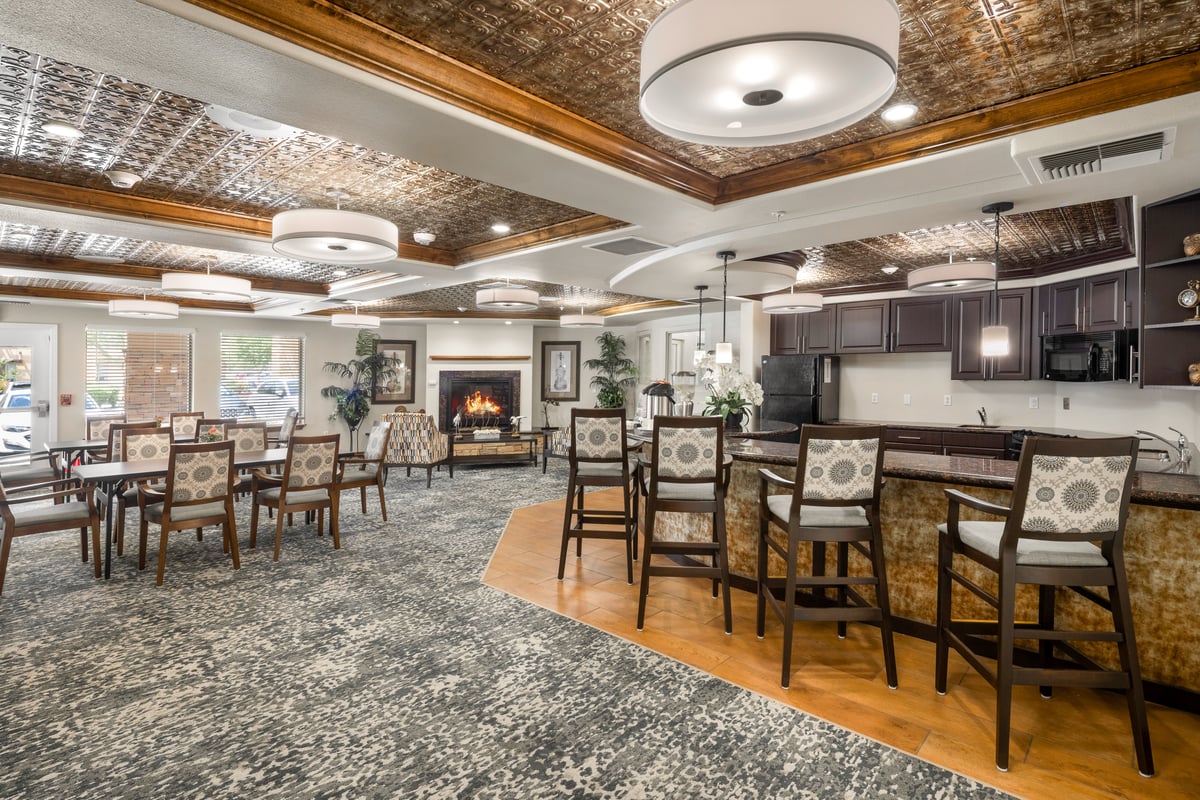

Memory care in La Quinta, CA, works best when daily life feels familiar, calm, and steady rather than rushed. Thoughtful routines, recognizable spaces, and consistent caregivers shape days that feel safer and more human.
People living with dementia find familiar routines and surroundings comforting; when the environment changes or feels unfamiliar, participation in daily activities becomes harder, according to research by Sun et al. from Frontiers in Dementia (2025). Familiar locations, landmarks, and ongoing patterns help maintain connection and involvement rather than withdrawal.
In memory care, familiarity shapes how each day unfolds. Predictable schedules, known spaces, and repeated activities help lower confusion and ease transitions. Days become steadier when routines become a reliable rhythm you can count on.
How Does Familiarity Improve Daily Life in Memory Care?
Familiarity reduces stress by lowering the number of daily decisions residents must process. Recognizable routines, repeated cues, and consistent caregiver interactions support emotional balance. Daily life feels steadier when expectations remain predictable rather than shifting from moment to moment.
Comfort grows through repetition. The same meal times, walking paths, and activity rhythms allow residents to move through the day with less hesitation. That steadiness enhances daily life with memory support while preserving dignity and confidence.
Why Does Memory Care Design Focus on Consistent Environments?
Memory care design centers on reducing confusion through visual and spatial consistency. Clear layouts, repeated landmarks, and gentle lighting help residents orient themselves without constant guidance. Spaces that feel familiar support independence within a dementia-friendly environment.
Design choices also support safety without feeling restrictive. When rooms follow predictable patterns, residents move with greater confidence. That approach strengthens Alzheimer's care in La Quinta by blending comfort, recognition, and everyday function.
Routines That Build Calm and Confidence
Daily routines within excellent amenities create a sense of control when memory feels unreliable. Predictable schedules reduce decision fatigue and help residents move through the day with less stress. Familiar rhythms support emotional balance and strengthen daily life with memory support.
Routines also reinforce identity. Repeated activities remind residents of who they are and what comes next; consistency brings emotional safety without needing constant explanation. That steady flow supports a dementia-friendly environment while preserving dignity.
Key routine anchors include:
- Morning rhythms
- Meal timing
- Rest periods
- Activity blocks
- Evening cues
Familiar Spaces That Support Orientation
Physical spaces influence how residents move, pause, and engage throughout the day. Clear layouts, repeated visual cues, and recognizable furniture reduce mental strain. When rooms feel known, navigation becomes calmer and more intuitive.
Familiarity also reduces reliance on constant guidance. Residents gain confidence moving between spaces when surroundings remain consistent; design quietly reinforces memory through repetition rather than instruction. That approach strengthens memory care design without overwhelming the senses.
Design features that support orientation include:
- Clear pathways
- Visual landmarks
- Consistent colors
- Open sightlines
- Simple layouts
Consistent Care Teams Build Trust
Relationships anchor memory care more than schedules alone. Seeing the same caregivers each day builds recognition and emotional security. Trust grows when interactions feel familiar rather than transactional.
Consistency supports communication. Care teams learn personal preferences, habits, and emotional cues over time; recognition strengthens human connection and reduces anxiety. That continuity supports Alzheimer's care in La Quinta through relationship-based care.
Consistency benefits include:
- Recognized faces
- Trusted voices
- Predictable support
- Emotional reassurance
- Strong rapport
Family Presence Strengthens Daily Comfort
Family involvement reinforces identity and belonging. Familiar voices, shared stories, and regular visits provide emotional grounding. Residents feel seen when family remains part of daily life.
Collaboration also supports care continuity. Shared insights help staff align routines and responses; family connection deepens stability without disrupting structure. That balance strengthens family involvement while maintaining calm.
Ways families support comfort include:
- Regular visits
- Shared routines
- Personal items
- Memory cues
- Gentle reassurance
Daily Moments That Feel Meaningful
Meaning comes from small, familiar actions rather than novelty. Repeated activities create comfort and purpose within daily life with memory support. Residents engage more when expectations remain steady.
Simple moments reinforce confidence. Familiar tasks allow participation without pressure; purpose grows through repetition rather than complexity. That rhythm supports a dementia-friendly environment rooted in ease.
Meaningful daily moments include:
- Music sessions
- Gentle movement
- Mealtime rituals
- Quiet hobbies
- Social touchpoints
Frequently Asked Questions
How Does Memory Care Support Emotional Comfort?
Memory care supports emotional comfort by reducing uncertainty throughout the day. Predictable routines, familiar caregivers, and steady environments lower stress and help residents feel secure. Emotional comfort grows when daily expectations remain consistent.
Staff also respond to emotional cues rather than relying only on schedules. That responsiveness allows care to adapt without disrupting structure. Residents feel understood rather than rushed or corrected.
What Makes a Dementia-Friendly Environment Effective?
A dementia-friendly environment removes unnecessary complexity. Clear layouts, visual cues, and calm lighting help residents navigate spaces with confidence. Familiar design reduces hesitation and supports independence.
Effectiveness also depends on consistency over time. When spaces stay the same, residents rely less on memory recall. The environment becomes a quiet guide rather than a source of confusion.
How Do Families Stay Involved Without Disrupting Care?
Families stay involved through collaboration rather than control. Sharing routines, preferences, and personal history helps staff align care with each resident's identity. That partnership strengthens emotional continuity.
Visits work best when they follow familiar patterns. Repeated visit times and shared activities support comfort. Family presence reinforces stability when it blends smoothly into daily life.
How Does Structure Improve Daily Engagement?
Structure helps residents engage without pressure. Repeated activities reduce the need for decision-making and increase participation. Familiarity encourages involvement rather than withdrawal.
Engagement improves when tasks feel achievable. Simple, repeated actions allow success and reinforce confidence. Daily structure turns routine moments into meaningful experiences without overstimulation.
Memory Care La Quinta and the Comfort of Familiar Days
Memory care in La Quinta thrives when familiarity guides routines, relationships, and surroundings. Predictable structure and consistent care reduce stress while supporting confidence throughout the day.
At The Palms at La Quinta, memory care unfolds with intention; familiar rhythms, thoughtfully designed spaces, pet therapy, and a close-knit care team create days that feel calm and grounded. The desert light, quiet courtyards, and relationship-driven approach offer a setting where comfort grows naturally, and dignity stays front and center.
Schedule a tour to experience how The Palms at La Quinta creates memory care that feels genuinely human.